Speech and language therapy services support students with a wide range of communication, language, literacy, and functional communication needs that may affect learning, academic performance, classroom participation, and social interaction. Services are individualized based on evaluation findings, developmental needs, educational goals, and the communication skills students need to participate successfully across learning environments.
Services may include:
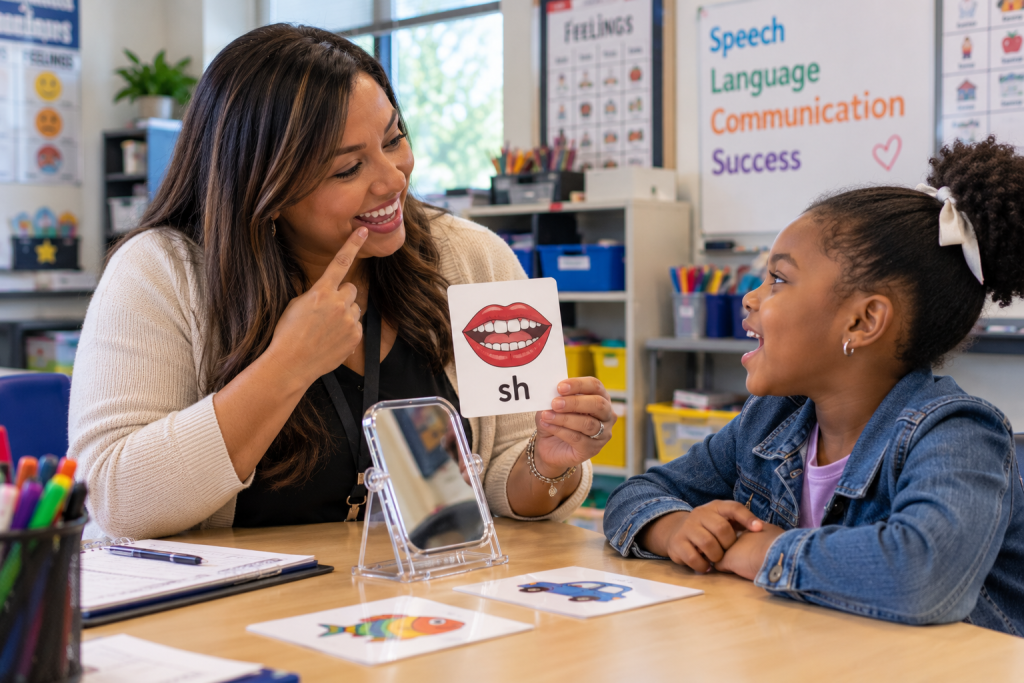
- • Articulation and speech sound therapy to improve speech clarity, sound production, and a student’s ability to communicate effectively with teachers and peers
- • Phonological processing and phonological awareness support to strengthen skills related to speech, reading, spelling, and other language-based learning needs
- • Expressive language therapy to strengthen vocabulary, grammar, sentence formulation, storytelling, organization of ideas, and clear verbal communication
- • Receptive language therapy to support listening comprehension, following directions, understanding questions, processing spoken information, and accessing classroom instruction
- • Pragmatic and social communication therapy to develop conversation skills, perspective taking, peer interaction, problem solving, and appropriate communication across educational and social settings
- • Fluency therapy for students who stutter or experience other fluency needs that may affect communication and classroom participation
- • Voice therapy and support for vocal quality, vocal hygiene, pitch, volume, and healthy voice use when appropriate
- • Literacy-related language therapy to support reading comprehension, written expression, spelling, narrative organization, and language-based learning needs
- • Cognitive-communication support for attention, memory, organization, sequencing, problem solving, executive functioning, and other skills that may affect learning and communication
- • Augmentative and alternative communication support for students who benefit from communication boards, speech-generating devices, visual supports, or other communication tools to access instruction and express their needs
- • Functional communication therapy to strengthen the communication skills students need to participate in classroom activities, interact with peers and educators, express needs, and become more independent throughout the school day
- • Teacher, family, and educational team consultation to support communication strategies and encourage skill development and carryover across learning environments
Our speech and language professionals work collaboratively with students, educators, families, and other members of the educational team to identify communication needs that may affect learning and participation. Services are individualized to support each student’s educational goals, strengthen functional communication skills, and promote greater access, engagement, and success throughout the educational experience.